
Custom Printed Spill Kit Labels for Warehouse Safety: A Complete Guide
Learn how custom printed spill kit labels improve warehouse safety, compliance, and brand consistency across Australian worksites.

Written by
Brad Kelleher
Safety & Workwear
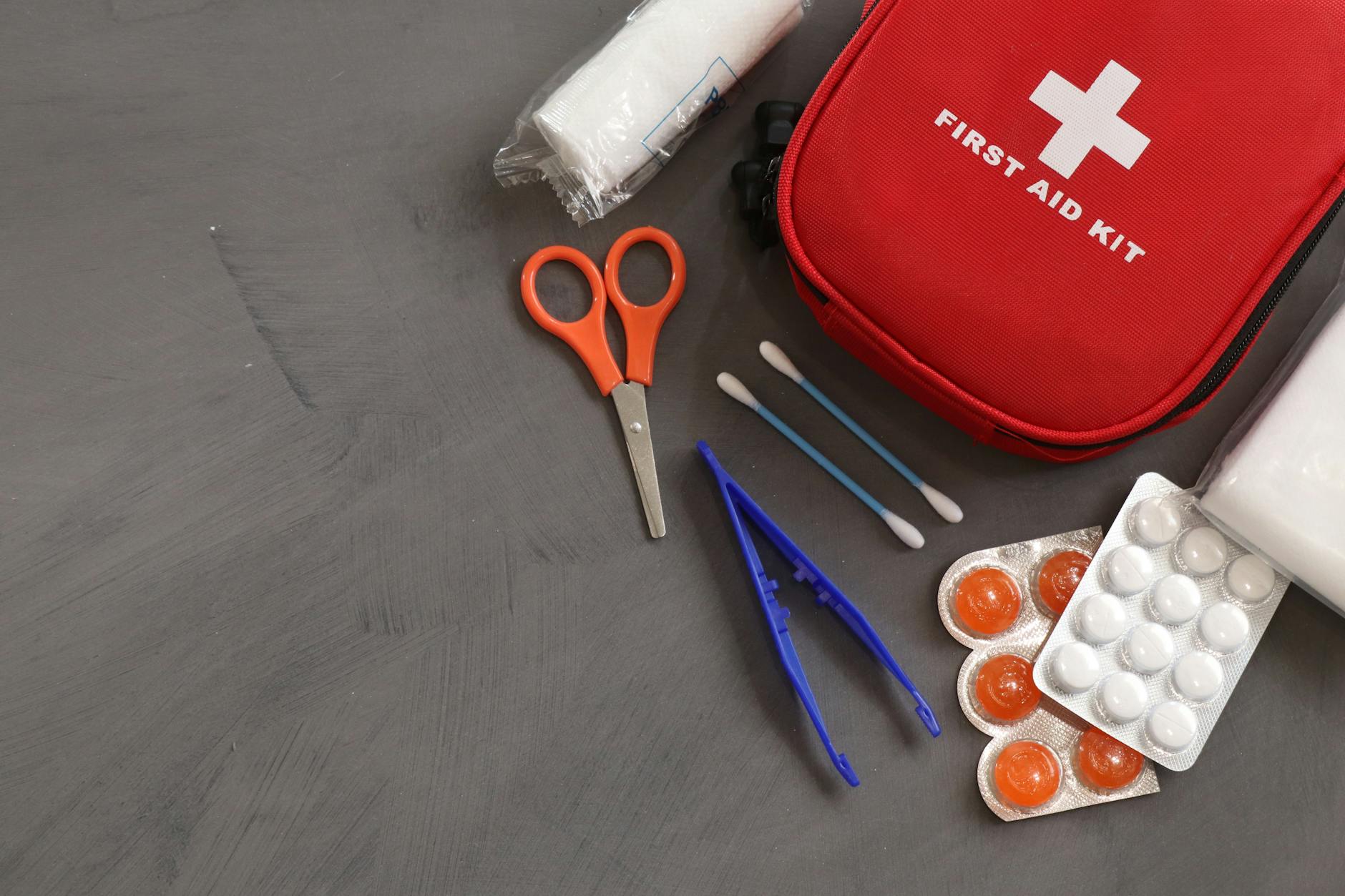
Warehouse safety isn’t just about having the right equipment on hand — it’s about making sure every single person on your floor can find it, identify it, and use it correctly under pressure. Custom printed spill kit labels for warehouse safety are one of those deceptively simple tools that can make an enormous difference to how a facility operates. Whether you’re managing a large distribution centre in Western Sydney, overseeing a food manufacturing plant in Melbourne’s outer west, or running a logistics hub in Brisbane, the right labelling on your spill kits isn’t just good housekeeping. In many cases, it’s a compliance requirement that could determine the outcome of a WorkSafe inspection — or worse, an incident review.
Why Custom Printed Spill Kit Labels Matter in Australian Workplaces
Walk through most warehouses across Australia and you’ll find spill kits tucked away in corners, mounted to walls, or stored in trolleys. The problem isn’t usually a shortage of spill response equipment — it’s a lack of visibility and clear identification. Generic labels fade, peel, or simply don’t communicate enough information to be genuinely useful in an emergency.
Custom printed labels solve several problems at once. They give your spill kits a consistent, professional appearance that aligns with your broader workplace safety system. They can include specific information your team actually needs — the type of spill kit (chemical, oil-only, general purpose, or biohazard), the location reference, the responsible officer’s details, restock instructions, and relevant Australian Standard references like AS 1678 and AS/NZS 4602.
Beyond compliance, there’s a real practical benefit. When every label across your facility uses the same colour coding, iconography, and layout, your workers develop an instinctive recognition of safety equipment. That matters enormously when seconds count.
The Link Between Labelling and Australian Safety Standards
Australian workplaces are governed by Work Health and Safety (WHS) legislation that operates at both state and federal levels. Safe Work Australia sets the national model, but each state and territory — from Queensland to South Australia to the ACT — has its own regulatory body enforcing local compliance. Part of meeting WHS obligations involves ensuring that hazardous materials management equipment is clearly identified and accessible.
Custom labels that include your company name, emergency contact numbers, an expiry or inspection date field, and a QR code linking to your safety data sheets (SDS) position your business as genuinely compliant — not just technically ticking boxes. They also serve as a powerful tool during ISO 45001 certification audits or internal safety reviews.
What to Include on Custom Printed Spill Kit Labels for Warehouse Safety
Getting the content right is just as important as the printing quality. Here’s what experienced safety managers typically include on a well-designed spill kit label:
Essential Information Fields
- Kit type and capacity — e.g. “20L Chemical Spill Kit” or “Hazchem Absorbent Response Kit”
- Location identifier — warehouse bay number, zone reference, or site address
- Contents checklist — absorbent pads, booms, gloves, disposal bags, instruction sheet
- Inspection and expiry date fields — ideally with a write-on section or a secondary peel-off sticker
- Emergency contact details — internal first aid officers, the Poisons Information Centre (13 11 26), or site-specific escalation contacts
- Relevant pictograms — GHS (Globally Harmonised System) hazard icons where appropriate
- QR code — linking to your SDS documents or internal safety procedures
- Company logo and branding — this reinforces ownership, accountability, and a professional safety culture
That last point is worth emphasising. Many larger organisations across Perth, Adelaide, and Darwin are now integrating their broader brand identity into their safety labelling as a way of reinforcing a culture where safety and professionalism go hand in hand. A well-branded safety environment sends a message to employees and visitors alike: this organisation takes its responsibilities seriously.
Choosing the Right Label Materials and Printing Methods
Not all labels are equal. In a warehouse environment, your labels need to survive heat, moisture, UV exposure, chemical splashes, and rough handling. The printing method and substrate you choose will determine how long your labels last and how legible they remain.
Polypropylene (PP) or polyester labels are the most common choice for industrial environments. They’re waterproof, tear-resistant, and suitable for both indoor and outdoor use. Vinyl labels offer excellent flexibility and durability on curved surfaces like drums or cylinders.
For decoration methods, digital printing is ideal for small-to-medium runs (think 50 to 500 labels) where you need full colour and variable data fields. Laser engraving or pad printing suits rigid signage plates or metal tags. For large volumes, screen printing brings down the per-unit cost significantly — especially if you’re standardising across a large multi-site operation.
If your spill kits are housed in custom printed bags or pouches, heat transfer and sublimation printing can produce vibrant, durable branding directly onto the bag surface — no separate label required. This is a great option for organisations that also invest in promotional clothing Australia or other branded workwear, since the same supplier can often handle both.
Ordering Custom Labels: Practical Considerations for Warehouse Managers
Understanding how the ordering process works will save you time, budget headaches, and last-minute frustrations. Here’s what to expect when sourcing custom printed spill kit labels in Australia.
Minimum Order Quantities and Pricing
Most Australian label printers operate with MOQs of 50 to 100 units for digital printing. If you’re ordering screen-printed labels, the MOQ is typically higher — around 250 to 500 units — but the per-unit cost drops substantially. For a single-site warehouse with 10 to 20 spill kits, digital printing makes the most financial sense. For a national logistics business with facilities in Melbourne, Brisbane, and Perth, a larger print run will offer much better economies of scale.
Setup fees vary depending on the number of colours and complexity of the design. Expect to pay between $40 and $120 for a standard digital setup. Always ask whether your supplier offers free digital proofs — most reputable Australian printing companies do, and it’s an essential step to avoid costly reprints.
Turnaround times for custom labels typically run between 5 and 10 business days from proof approval. If you’re sourcing as part of a broader safety audit or compliance review, factor this into your timeline — particularly around the Christmas and New Year period when lead times across Australian suppliers extend significantly.
Artwork Requirements
For the sharpest print quality, provide your artwork as a vector file (AI, EPS, or PDF) at minimum 300 DPI. If your company logo is embedded in a Word document or low-resolution JPEG, ask your graphic designer or print supplier to redraw it as a vector — it’s usually a simple process and makes a significant difference to the final result.
PMS (Pantone Matching System) colour specifications are important if your labels need to match existing brand guidelines or specific safety colour standards (e.g. AS 1319 colours for hazard identification). Mention your PMS codes upfront to avoid any colour drift in the final print.
For businesses also exploring other promotional products Australia wholesale options for their operations, it’s worth consolidating suppliers where possible to streamline approvals and reduce freight costs.
Integrating Labels into Your Broader Workplace Safety Programme
Custom printed spill kit labels don’t exist in isolation — they’re one component of a well-structured workplace safety system. Savvy safety managers integrate their labelling strategy with their broader kit of PPE, signage, training materials, and emergency response documentation.
Consider pairing your custom spill kit labels with other branded safety items. Promotional hi-vis vests in Melbourne are a natural complement for warehouses where high-visibility PPE is mandatory. First aid kits with custom labelling, promotional burn cream sachets for kitchen safety kits, and clearly branded eyewash stations all contribute to a cohesive, professional safety environment.
Some organisations also use custom labels as part of their induction materials, paired with branded lanyards, promotional pens in bulk for signing off safety checklists, and printed reference cards. The overall effect is a workplace where safety culture is visibly embedded — not bolted on as an afterthought.
It’s also worth thinking about eco-friendly promotional products when specifying label materials. Recycled stock labels and soy-based inks are now widely available and perform comparably to conventional options in many warehouse environments. If your organisation has a sustainability policy or is working toward environmental certification, this is an easy win worth discussing with your print supplier. You might also explore sustainable product options for the broader safety kit, from reusable packaging to biodegradable absorbent materials.
Training and Communication
Once your labels are printed and applied, communicate the changes to your team. A short toolbox talk — especially at shift change-overs — is all it takes to walk workers through the new labelling format, explain the QR code functionality, and reinforce when and how to use the kits. Safety signage and labelling only works when people understand it.
Posting a simple reference guide in lunchrooms or near site entrances can also help reinforce the system. If you produce branded promotional items for your staff — such as winter branded gifts for suppliers or team merchandise — a small custom printed reference card tucked inside goes a long way.
Key Takeaways
Investing in custom printed spill kit labels for warehouse safety is a practical, cost-effective step that improves compliance, reduces risk, and reinforces a professional safety culture across your facility. Here’s what to remember:
- Content is king — include kit type, location, contents list, inspection dates, emergency contacts, and a QR code linking to your SDS documents
- Choose the right material — polypropylene or vinyl labels withstand the harsh conditions of an industrial warehouse environment; match your substrate to the specific application
- Understand your print run — digital printing suits smaller orders, while screen printing offers better value at scale; most Australian suppliers work with MOQs of 50–500 units
- Provide professional artwork — vector files at 300 DPI with PMS colour codes give you the cleanest, most accurate result and reduce costly reprints
- Integrate into a broader safety system — pair your labels with hi-vis workwear, first aid signage, and training materials for a cohesive, compliance-ready workplace
Well-designed custom printed spill kit labels for warehouse safety are ultimately an investment in your people, your operations, and your reputation. They’re a small thing that speaks volumes about how seriously your business takes its obligations — and that’s a message worth printing loud and clear.